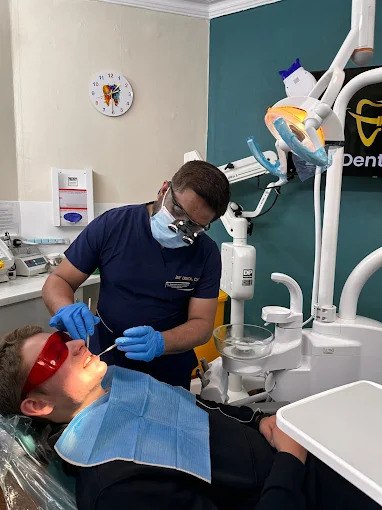
Gum Disease Treatment Procedure
Here is what your periodontal treatment looks like from your first visit to a healthier smile.
Gum assessment: Your dentist examines your gums, measures pocket depths around each tooth and checks for signs of bone loss using X-rays.
Treatment plan: Based on your assessment results, your dentist explains the stage of gum disease and the most suitable treatment approach for your case.
Scale and polish: Plaque and tartar are removed from above the gum line, reducing inflammation and giving your gums a clean surface to recover from.
Root surface debridement: A deep clean below the gum line removes bacteria and hardened tartar from the root surfaces, which brushing alone cannot reach.
Antibiotic therapy: In some cases, localised antibiotics are placed directly into deeper gum pockets to control bacterial infection alongside cleaning.
Surgical treatment: For advanced periodontitis where pockets are very deep, surgical procedures such as flap surgery or regenerative periodontal procedures may be recommended.
Referral to specialist: Where the case is complex or severe, your dentist will refer you to a specialist periodontist for advanced care and management.
Post-Treatment Care
Once your gum treatment is complete, keeping your gums healthy long term is the priority.
Regular maintenance visits: Gum disease is a chronic condition. Three to four monthly hygienist appointments keep bacterial levels under control after treatment.
Home cleaning routine: Your dentist advises on brushing technique, interdental brushes and flossing to maintain clean gum margins at home daily.
Lifestyle changes: Smoking significantly worsens gum disease and slows healing. Reducing or stopping smoking improves treatment outcomes considerably.
Blood sugar management: Patients with diabetes should keep blood sugar levels well controlled as uncontrolled diabetes increases the risk of gum disease returning.
Monitor for returning symptoms: Watch for bleeding, swelling or sensitivity returning between appointments and contact us promptly if these signs reappear.
Long term check-ups: Routine dental examinations every six months allow your dentist to catch any early signs of gum disease returning before it progresses again.